
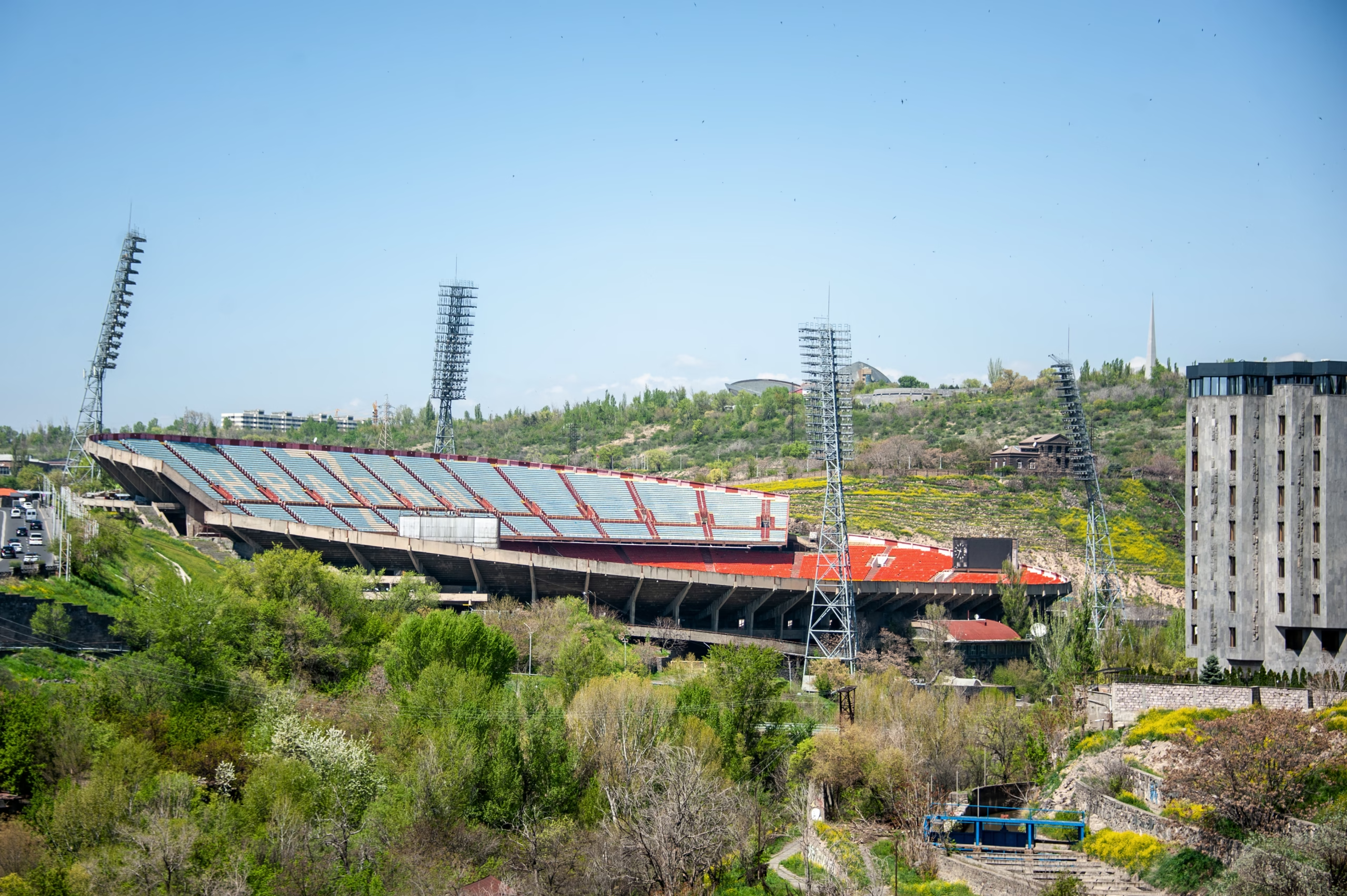
On the left bank of the Hrazdan River, which divides the Armenian capital Yerevan, stands one of the main symbols of Sovietization and the subsequent collapse of the former country. The stadium, which shares the valley and the name with the river, has witnessed the most glorious chapters of Armenian football. 50 years later, this unique football venue no longer serves its original purpose. Its future hangs in doubt.
Armenia has yet to taste the glory of playing in a major competition as an independent country. Alashkert became the first Armenian club to participate in the group stage of a European competition after qualifying for the Conference League in 2021. Therefore, local fans mainly draw their pride from the more distant Soviet times. The golden generation of Ararat from the mid-seventies, commemorated by a bronze statue in front of the Hrazdan Stadium, still represents the pinnacle of Armenian football.
In 1973, Ararat became the first and only Armenian club to win the Soviet championship while also winning the cup title on the way to a historic double. Two years later, the same club reached the quarter-finals of the European Cup (the predecessor of today’s Champions League), where they faced the defending champions, Bayern Munich. The first match in Munich ended 2-0 in favour of the Bavarians, but this did not deter 70,000 fans from filling the stands in the Hrazdan Valley two weeks later. Bayern’s star-studded lineup, featuring Franz Beckenbauer, Gerd Müller, and Karl-Heinz Rummenigge, struggled in the Armenian capital. Ararat took the lead in the 35th minute and threatened to equalise until the end, but it remained 1-0, allowing the Bavarians to advance to the semi-finals with great difficulty. The victory, which will celebrate its 50th anniversary in 2025, remains a source of pride for Armenian fans – regardless of their club affiliations.
“It was so loud that Bayern players didn’t want to leave the locker room. Beckenbauer’s legs were shaking before the match,” a young fan of Urartu relived the urban legend while we watched his club’s league match.
Hrazdan and Ararat’s team from the seventies are synonymous with the golden chapter of Armenian football, partly due to their simultaneity. The stadium was built in just 18 months between 1968 and 1970 as part of the preparations for the 50th anniversary of Armenia’s incorporation into the Soviet Union. Built as a symbol of Sovietization, the stadium accommodated over 70,000 fans, reflecting the popularity of Ararat’s team.
“In the early seventies, the stadium was regularly full. From the older generation, we can still hear how amazing the atmosphere was back then,” says local journalist Hrach Khachatryan. A match against Kairat from Almaty set the attendance record with 78,000 fans packed into the stadium.
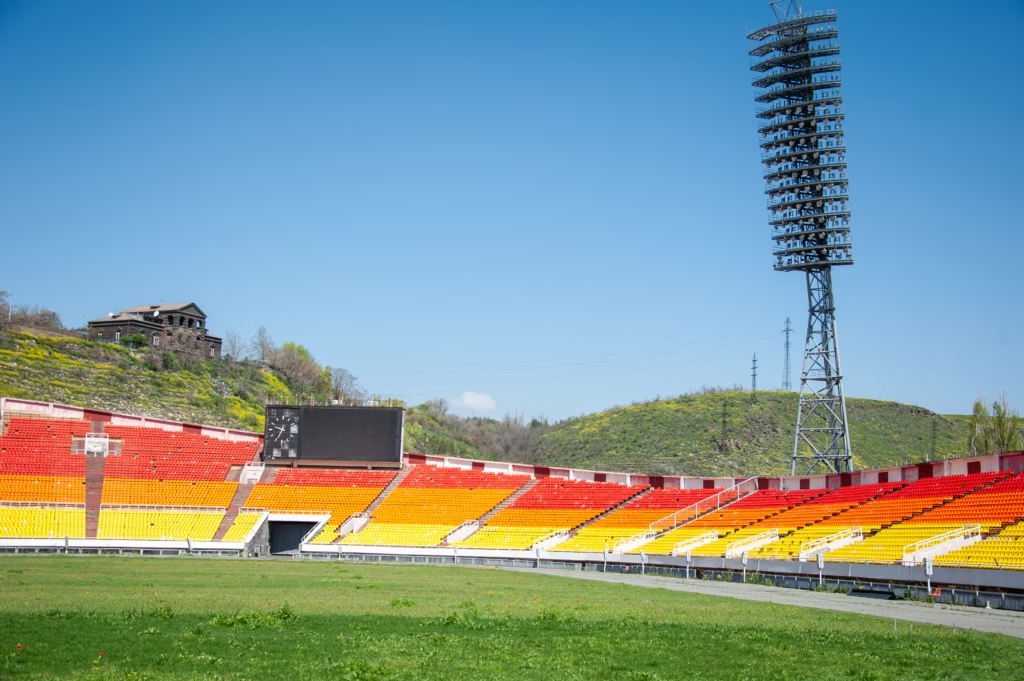
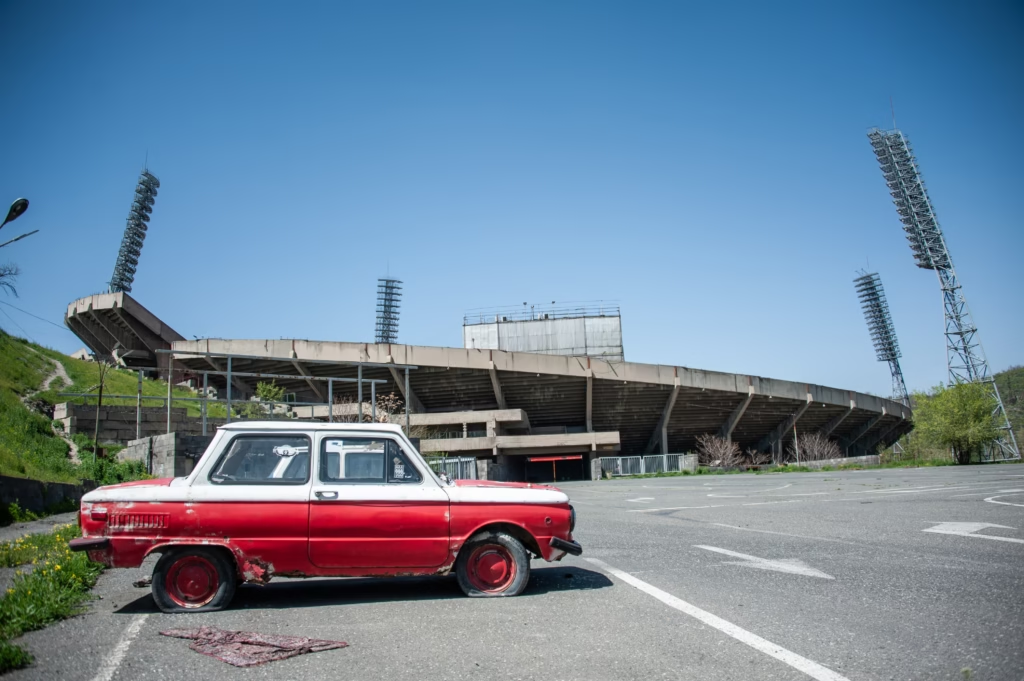
Unfortunately, this cult football venue also symbolises the fate of the Soviet Union. After a prolonged period of decay, it seems to be headed for a sad end. The Hrazdan Stadium last hosted an official match in 2016. Since then, unresolved ownership issues have left it more or less at the mercy of the weather conditions. In 2022, it briefly came to life for a concert by American rapper 50 Cent. The athletic track is still used for children’s practice, and the entrance to the main stand turns into a local market on weekends. That, however, is all the former pride of the country and its football now serves.
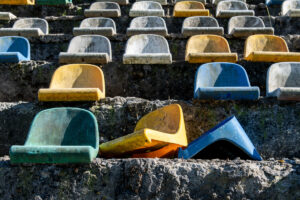
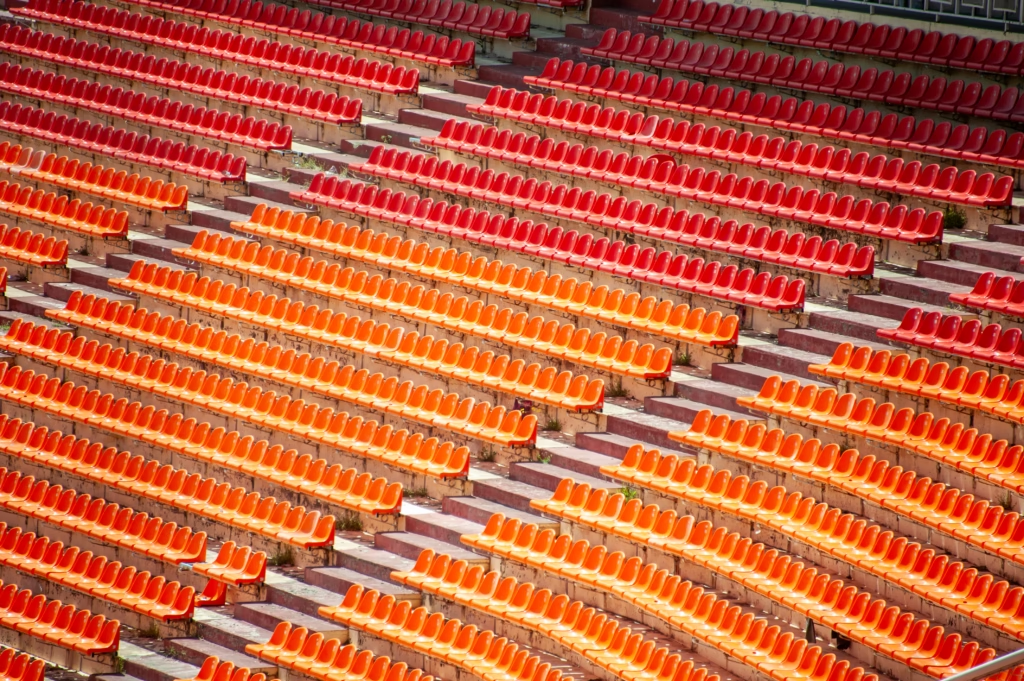
The 54,000 seats installed during the last renovation in 2008 still retain their distinctive, vibrant colours, but locals wonder – and with good reason – whether they will ever have the chance to sit on them again. Especially since, in recent years, no one has shown interest in making Hrazdan operational again.
“Rumours about renovating the stadium have completely died down. When the Armenian national team still played here, there was some interest, but today there is none,” explained Khachatryan. Renovation is also highly questionable because, according to some estimates, it would even be cheaper to demolish the stadium and build a new, significantly smaller one at the site of the country’s greatest football successes. After all, a domestic league with an average attendance well below a thousand doesn’t need such a large stadium.
However, Khachatryan still believes that the stadium in its current form is not too big for the needs of Armenian football, supporting his view with the example of their northern neighbours. “Look at Georgia. Their national stadium (Boris Paichadze Dinamo Arena) is regularly full for national team matches but almost empty when Dinamo Tbilisi plays. This way, the stadium would at least be used for football.”
It’s disappointing for every Armenian fan that this unique, historic stadium has been unused for nearly a decade. Hopefully, this will change soon.
This article was originally published in the first edition of Photo Curva Magazine.