
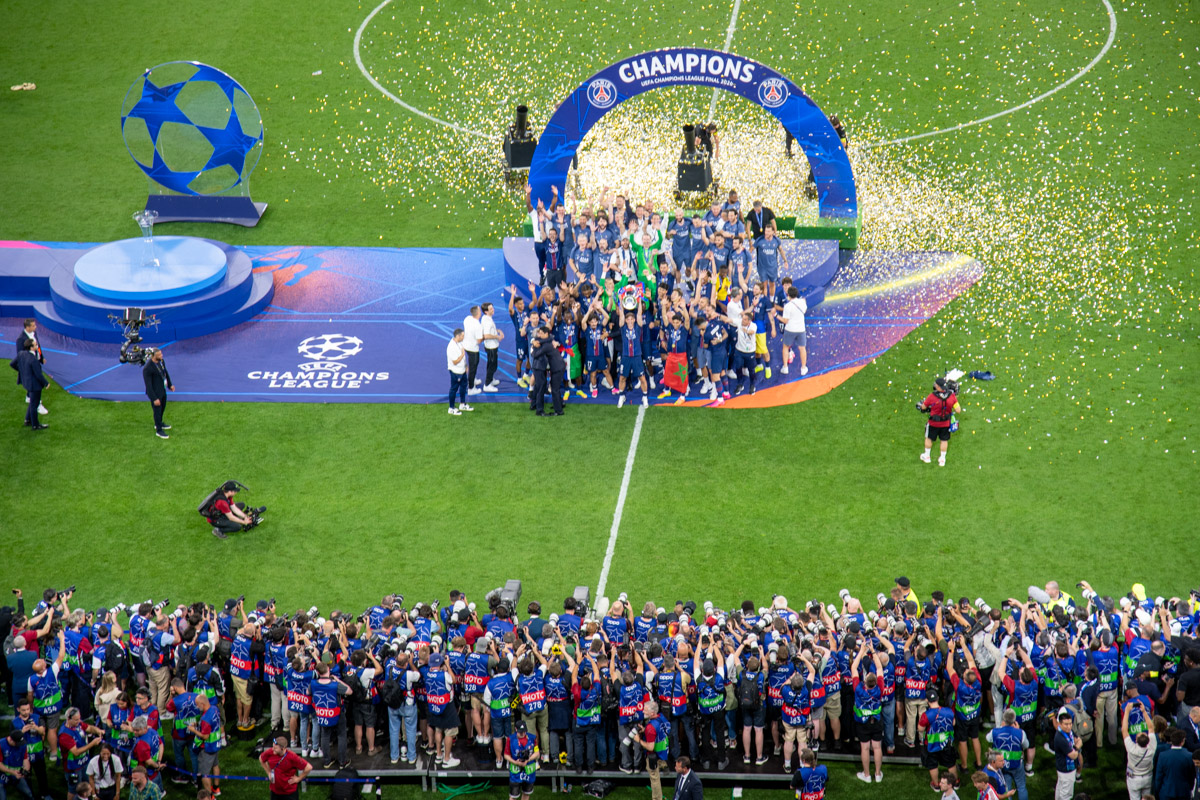
The Champions League Final. For many, the biggest fixture on the football calendar. For others, the perfect symbol of the game’s ever-growing commercialisation. Through our job, we had the privilege of experiencing it first-hand. So what was it really like?
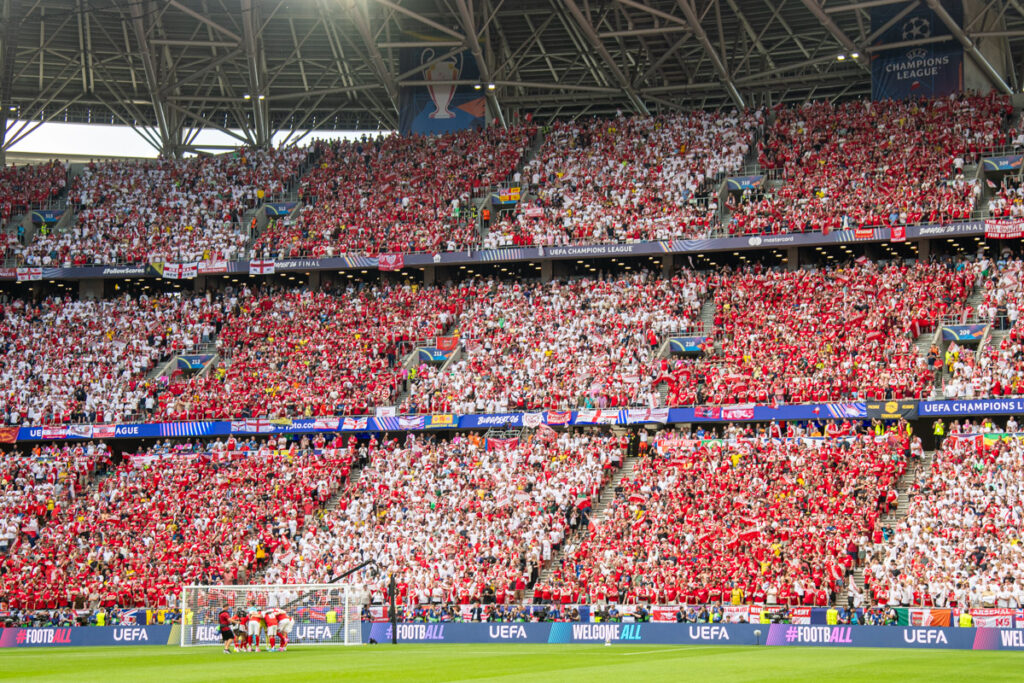
An estimated 200,000 fans travelled to Budapest during the week of the final. The vast majority were Arsenal supporters, as their side reached the final for only the second time in history, and for the first time in 20 years.
Most of them arrived without tickets. UEFA allocated only 17,200 tickets to each club, with a further 4,000 going on general sale. The rest was reserved for sponsors, UEFA partners and rights holders.
Official ticket prices started at €70 and climbed to an astonishing €950. But with demand far exceeding supply, prices on the secondary market quickly spiralled out of control.
UEFA likes to promote “fans first” slogans, but neither the allocations nor the prices really support that message in practice.
Contrary to what some “ultras” pages on social media shared, the night before the game passed relatively calmly. Arsenal fans took over the city centre, with PSG supporters also present, but we did not witness a single moment of tension between the two sets of fans.
The next morning, however, the mainstream media focused almost entirely on one fight, probably the only serious incident of the night, after a video of it circulated online.
On matchday, the first ticket checks were already taking place around a kilometre from the stadium, a measure clearly designed to avoid overcrowding close to the entrances. It was to prevent the 2022 final scenario in Paris, where chaos outside the ground delayed kick-off by more than half an hour.
Right next to those first checks stood the ticket touts. Some were asking as much as €5,000 for a single ticket.
The gates opened three hours before the 18:00 kick-off. This was the first final in history to start in late afternoon time slot, officially to give fans more time to enjoy the evening after the match, but also to better suit Asian TV markets.
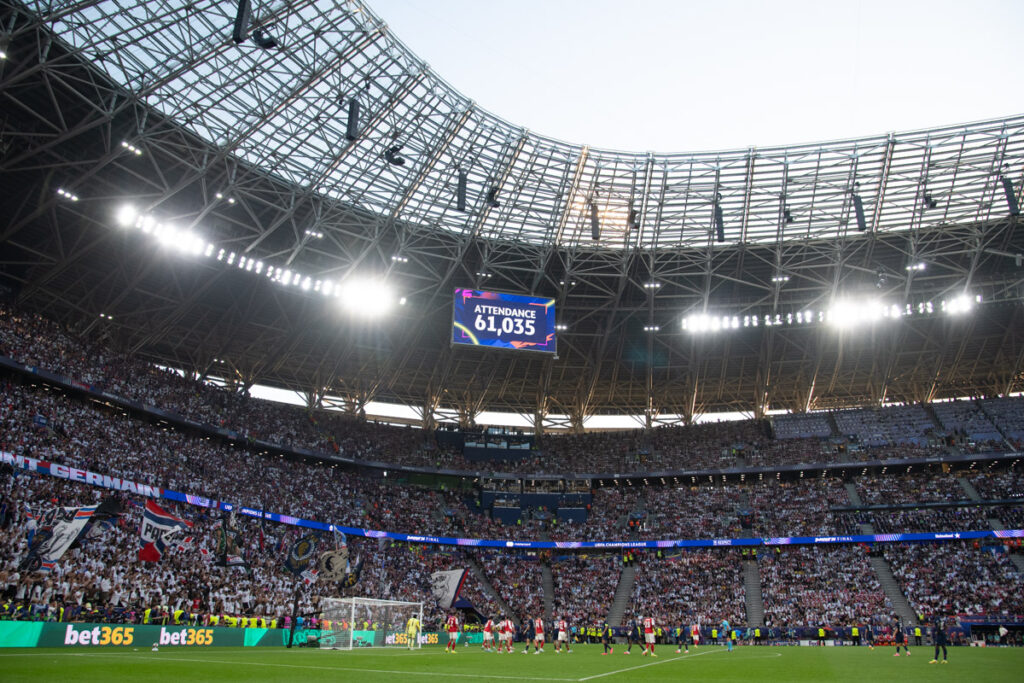
PSG fans arrived much earlier than their English counterparts and started chanting almost two hours before kick-off. Groups from Juve Stabia, Napoli and Fluminense were also present in the Parisian end.
Then, 15 minutes before kick-off, just as the stadium was almost full and the atmosphere was building nicely, everything came to a halt.
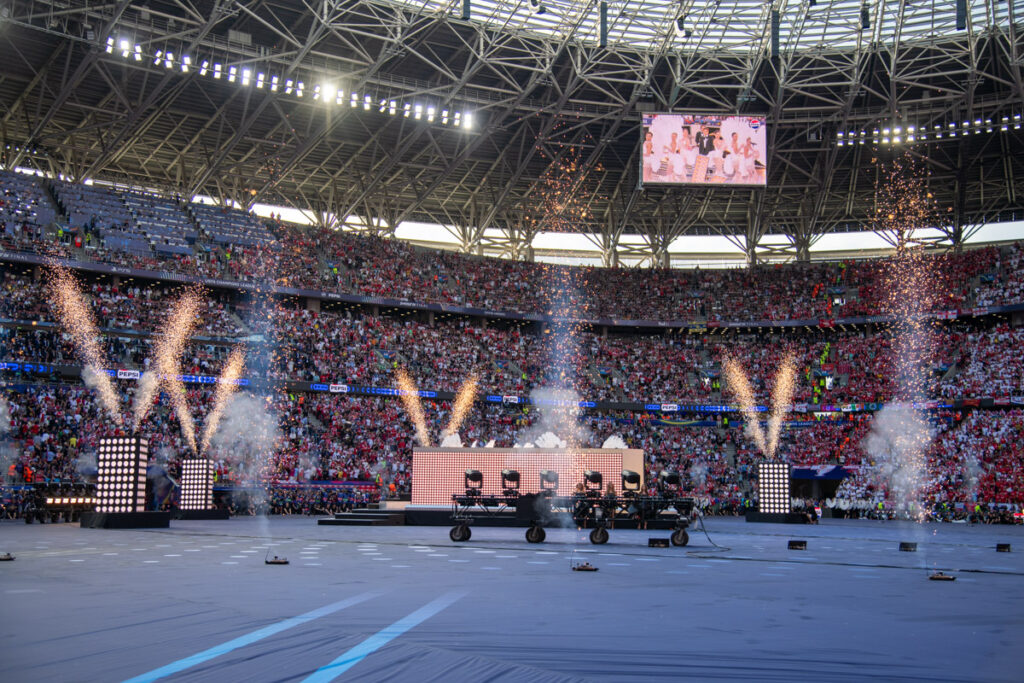
The pitch was covered with a black artificial surface, allowing American rock band The Killers to perform their pre-game show.
Arsenal fans seemed to enjoy it and sang along. PSG fans could not have cared less and tried to continue with their own songs, although they had little chance against the music blasting from the stadium sound system.
The pre-game ceremony was first introduced at the 2016 final in Milan, but we will never get used to it. We go to stadiums to enjoy the atmosphere and watch football. If we wanted to listen to random music acts, we would go to a concert or a festival.
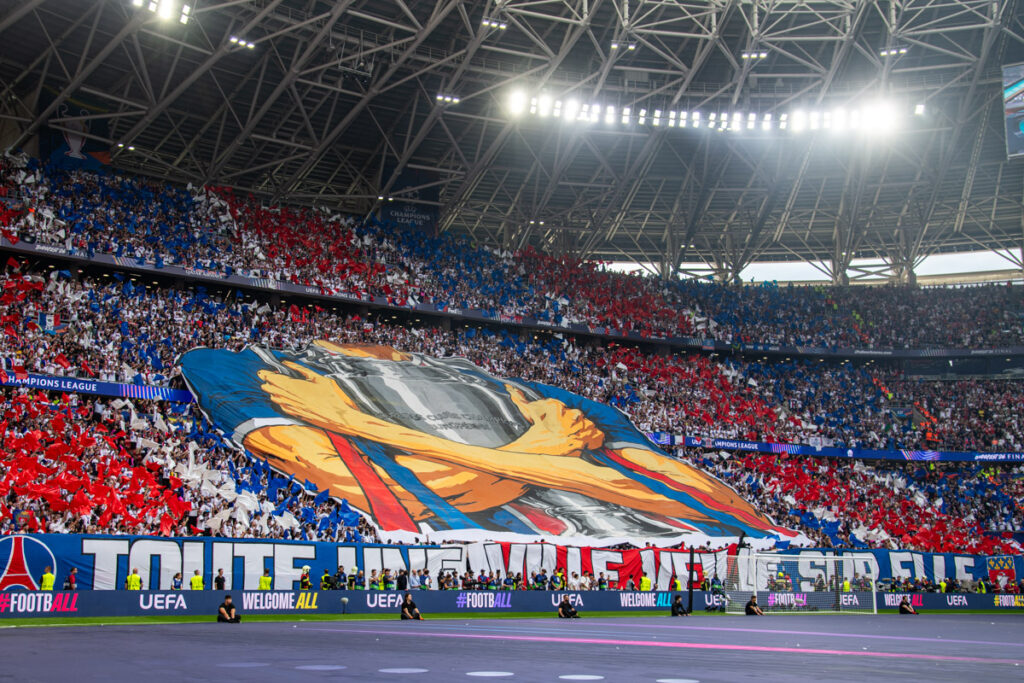
PSG presented a nice tifo showing arms holding the Champions League trophy, making it clear they had no intention of giving it away after thrashing Inter 5-0 in the last final. Arsenal also had some form of “tifo”, but it was most probably organised by the club.
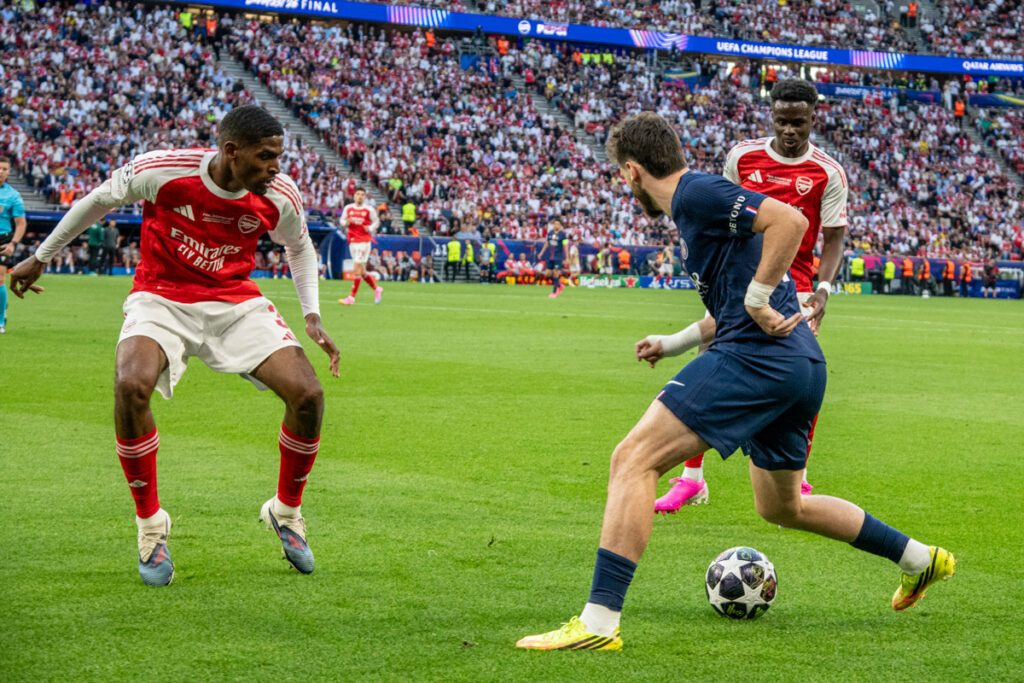
The match started on Arsenal’s terms, with Kai Havertz scoring in the sixth minute. In the stands, however, PSG fans were expectedly much louder for most of the first half. Arsenal chants were sporadically heard from the other end, but only in short bursts and with long gaps in between.
On the pitch, PSG were also on the front foot and deservedly equalised in the second half, when Ousmane Dembélé converted from the spot. He celebrated right in front of his own fans, who celebrated with pyro. From that moment on, the Parisian support only intensified.
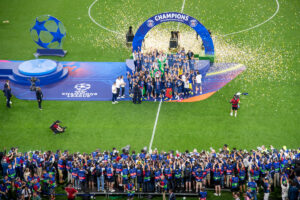
Thirty minutes of extra time brought little action, and penalties decided the European champions. In the fifth round, Gabriel sent his effort high over the bar, and PSG celebrated their second consecutive title. The triumph was once again marked with plenty of pyro.
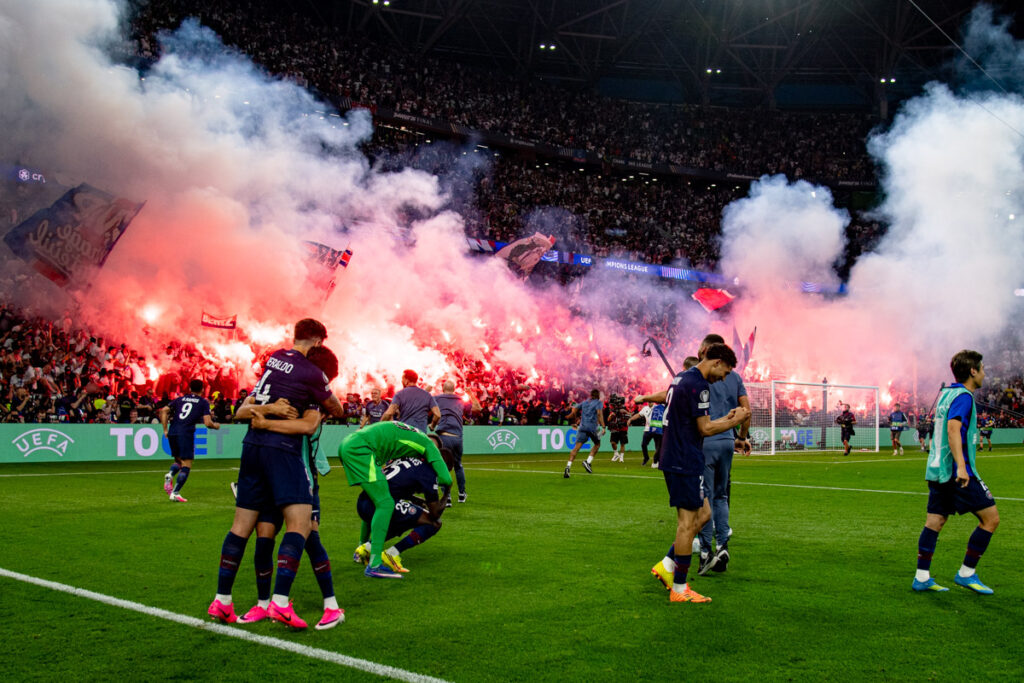
The final ended with a deserved PSG win. They were clearly the better side, both on the pitch and in the stands.
It was a privilege to be part of such an event. But it also raised serious questions about the future of top-level European football.
Three-digit ticket prices, let alone four-digit ones, should not be normal for a football match. Nor should it be normal that only around half of the stadium capacity goes to actual supporters.
But this is the reality of top-level European football.
To remain competitive, clubs need more and more money. In return, they are willing to accept any funding available. The game is increasingly driven by the capital of foreign sponsors and broadcasters, all of whom have their own interests.
Too often, those interests stand in direct conflict with the people who made football what it is: the fans.